
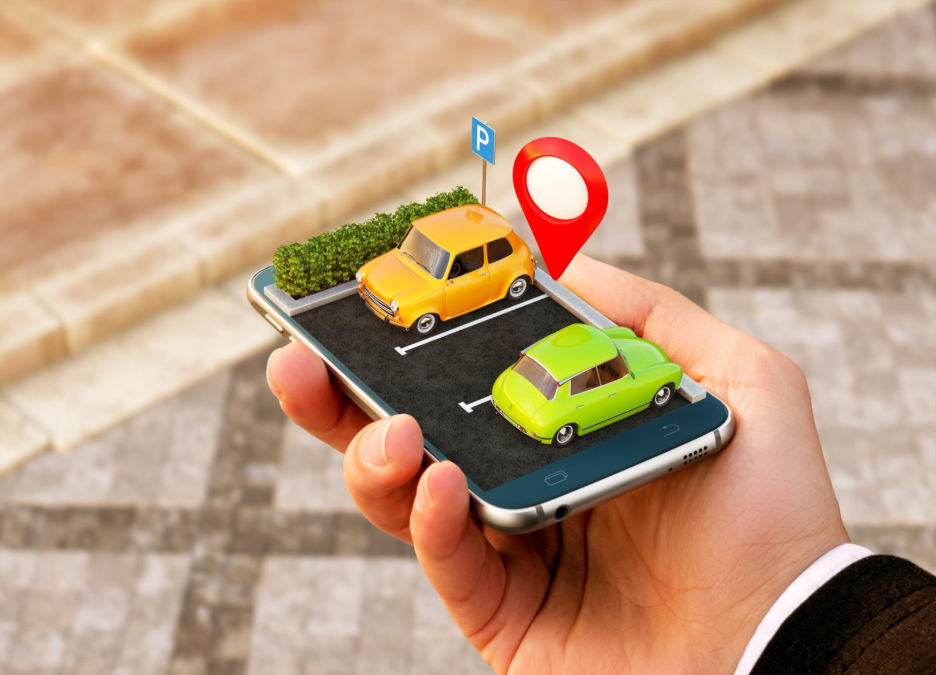
For decades, urban drivers have been conditioned to believe that finding parking means searching, circling blocks, scanning curb signs, and hoping someone pulls out at the right moment. In cities like New York, this behavior has become so normalized that drivers expect to lose time just to park, contributing to daily parking congestion across NYC.
But a quiet shift is happening.
Instead of searching endlessly, more drivers are beginning to share parking spots. Just like ride-sharing and home-sharing reshaped transportation and travel, peer-to-peer (P2P) parking is changing how cities think about curb space, private spots, and urban mobility.
This shift isn’t about adding more parking, it’s about using what already exists more intelligently. And in dense cities like NYC, where parking demand consistently exceeds supply, that difference matters.
What Peer-to-Peer Parking Really Is and How Spot Sharing Works
Peer-to-peer parking is a simple idea with powerful implications.
At its core, P2P parking allows individuals to use an app to share parking spots, giving drivers access to underused parking spaces such as residential driveways, private lots, or time-restricted spots through a digital platform. Instead of leaving these spaces empty, owners can make them available to drivers who need NYC parking nearby.
For drivers, this replaces blind searching with intentional parking. For space owners, it turns idle real estate into value.
Unlike traditional parking garages or metered street parking, P2P parking is decentralized. It doesn’t rely on new infrastructure. It relies on participation, trust, and technology — often delivered through a real-time parking app — to connect people at the right moment.
This is why many urban mobility experts see peer-to-peer parking as a natural evolution, not a disruption, but an optimization.
Why NYC Is Perfect for Peer-to-Peer Parking Models
Few cities are as well-suited for P2P parking as New York.
NYC has:
- Extremely high parking demand
- Large amounts of underutilized private parking
- Constant turnover in residential and mixed-use neighborhoods
- A population already comfortable with sharing-economy platforms and NYC driving apps
At the same time, NYC drivers face some of the worst urban parking problems in the country. Circling for street parking contributes significantly to congestion, fuel waste, and frustration.
Peer-to-peer parking addresses these pain points directly. Instead of adding more cars to the search loop, it redirects drivers to known, available spaces using a smarter parking app NYC drivers can rely on.
In a city where every square foot matters, sharing beats searching.
How Payments and Convenience Converge in Modern Parking Apps
One reason peer-to-peer parking works today, and didn’t a decade ago, is seamless digital payments.
Modern car parking solutions NYC drivers use now remove friction by handling:
- Spot discovery
- Availability timing
- Payments
- Access clarity
Drivers no longer need to carry cash, interpret unclear signage, or gamble on availability. Everything happens upfront, before they arrive, often through a single street parking app interface.
For space owners, the experience is equally streamlined. Listing a spot doesn’t require property management or long-term commitments. Availability can be flexible, and payments are handled automatically.
This convergence of convenience and compensation is what makes P2P parking scalable. It turns parking from a stressful task into a predictable transaction.
Community Trust and Safety in Peer-to-Peer Parking Platforms
Any sharing-based model succeeds or fails on trust.
Ride-sharing, home-sharing, and peer-to-peer marketplaces all faced early skepticism around safety and reliability. Parking is no different. Drivers need confidence that a spot is legitimate. Space owners need assurance that their property will be respected.
This is where parking app platform design matters.
Successful P2P parking systems emphasize:
- Clear spot descriptions
- Transparent availability windows
- Accountability through community participation
- Simple, intuitive user flows
When users understand expectations on both sides, trust forms naturally. Over time, this creates a self-regulating ecosystem where good behavior is reinforced and friction decreases.
In dense cities like NYC, where informal parking arrangements already exist offline, technology simply formalizes what people have been doing manually for years, improving parking availability without expanding physical supply.
Why Sharing Beats Searching—Especially in Dense Cities
Traditional parking systems assume scarcity must be solved by building more garages or enforcing stricter rules. Peer-to-peer parking challenges that assumption.
Instead of expanding supply, it unlocks hidden capacity.
Many parking spaces sit empty for hours each day. Residential driveways go unused during work hours. Private lots remain half-full outside peak times. Searching ignores these realities. Sharing embraces them.
When drivers know where parking is available before they arrive using a reliable NYC parking finder, several things happen:
- Circling decreases
- Traffic congestion drops
- Fuel consumption falls
- Streets become more predictable
From a city-planning perspective, this is powerful. Fewer cars searching for parking means fewer cars contributing to congestion without actually traveling anywhere.
This is why many mobility experts see peer-to-peer parking as part of the broader smart-city movement.
How SNAG Approaches Peer-to-Peer Parking Differently
Snag wasn’t built to replace parking, it was built to rethink how drivers access it.
Rather than positioning parking as a scarce resource to fight over, Snag approaches it as a shared network. The platform focuses on making parking more visible, more accessible, and less dependent on guesswork — positioning itself among the best parking app NYC solutions for modern drivers.
What sets Snag apart is its emphasis on:
- Community-driven participation
- Real-world urban behavior
- Reducing unnecessary searching
By focusing on how people actually park in cities like NYC, Snag aligns technology with behavior instead of forcing drivers into rigid systems.
The result is a parking experience that feels less like hunting and more like planning.
Peer-to-Peer Parking and Traffic Reduction in Urban Areas
One of the most overlooked benefits of P2P parking is its impact on traffic.
Multiple transportation studies have shown that a significant percentage of urban traffic consists of drivers circling for parking. When parking becomes intentional instead of reactive, those extra miles disappear.
Peer-to-peer parking reduces traffic by:
- Removing blind searches
- Shortening time-to-park
- Distributing demand across more locations
Even small reductions in circling can have outsized effects in dense neighborhoods. That’s why parking innovation is increasingly part of traffic and sustainability conversations—not just convenience.
Learning From the Broader Sharing Economy
Harvard Business Review has extensively documented how sharing-economy platforms succeed by maximizing underused assets. Parking fits squarely into this framework.
Just as spare bedrooms became short-term rentals and idle cars became ride-share vehicles, unused parking spaces represent latent value. The key isn’t ownership, it’s access.
Peer-to-peer parking applies this same logic to urban mobility, and cities like NYC are ideal testing grounds.
Why the Future of Parking Is Shared, Not Searched
The future of urban parking isn’t about more garages or stricter enforcement. It’s about using existing space more intelligently.
In cities like New York, where searching for NYC parking has become a daily tax on time and energy, peer-to-peer models offer a better alternative. Sharing replaces guessing. Planning replaces circling.
Snag sits at the intersection of this shift, helping drivers move from searching endlessly to parking intentionally.
Because the smartest cities won’t be the ones with the most parking.
They’ll be the ones that use it best.
Frequently Asked Questions About Peer-to-Peer Parking
Is spot-sharing legal?
Legality depends on local regulations and property ownership. Most peer-to-peer parking platforms operate within existing private property and usage rules.
How do people earn money from parking spots?
By sharing access to underused spaces during specific time windows, space owners can generate passive income without long-term commitments.
Does peer-to-peer parking reduce traffic?
Yes. By reducing circling and blind searching, P2P parking helps lower congestion and unnecessary vehicle movement.