
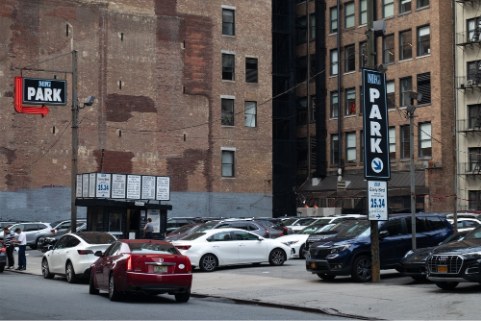
Urban parking problems are rarely framed as a systems problem. More often, it’s treated as an individual failure, drivers circling too long, parking illegally, or “not understanding the rules.” But when millions of people struggle with the same issue daily, the problem isn’t behavior. It’s infrastructure, incentives, outdated assumptions, and fragmented parking infrastructure.
Cities like Tokyo, San Francisco, and Amsterdam recognized this years ago. Instead of adding more signs or increasing enforcement, they redesigned how parking works, using data, pricing, and technology to manage demand rather than react to chaos.
New York City sits at a crossroads. Its parking challenges are among the most visible examples of urban mobility friction in the world, yet many of the solutions already exist elsewhere. The question is not whether NYC can fix parking, but which car parking solutions NYC can realistically adapt without breaking the city’s unique street ecosystem.
To understand where NYC can go, it helps to look at where other cities went right.
Tokyo’s Sensor-Precise Parking Model and Smart Parking Infrastructure
Tokyo approaches parking with a mindset that feels radical to New Yorkers: parking is planned before the car exists.
In most Tokyo neighborhoods, car ownership requires proof of a dedicated parking space. This policy alone eliminates a massive amount of street parking congestion. But beyond regulation, Tokyo’s real strength lies in precision.
Parking availability is tracked through:
• Embedded sensors
• Automated garages
• Real-time occupancy systems
• Integrated enforcement
Instead of guessing whether a space exists, drivers know. Parking is treated as infrastructure, not a side effect of streets.
This system works because Tokyo built parking into urban planning itself. Streets are not expected to absorb unlimited demand. Parking supply and vehicle ownership are tightly linked.
For NYC, this level of regulation would be politically and culturally difficult. However, the underlying lesson is powerful: uncertainty is the enemy. When drivers know where parking exists, or doesn’t, they stop circling, double-parking, and clogging streets.
That principle aligns with modern smart parking systems, which prioritize visibility over punishment.
San Francisco’s Demand-Based Parking Pricing (SFpark) and Real-Time Parking Data Systems
San Francisco took a different approach. Rather than restricting ownership, it focused on managing demand.
Through SFpark, the city implemented demand-based parking pricing for street parking. Sensors embedded in parking spaces track availability and adjust prices dynamically based on usage. When demand is high, prices rise. When demand drops, prices fall.
The result?
• Less circling
• Faster turnover
• Reduced congestion
• Higher compliance
Drivers don’t waste time hunting for “cheap” spots that don’t exist. Instead, pricing nudges behavior naturally.
SFpark also provided the city with something NYC lacks at scale: real-time parking data. The system didn’t just help drivers, it helped planners understand how streets actually function.
You can read more about this system via Wikipedia’s overview of SFpark.
While NYC relies heavily on static rules and enforcement, SF demonstrated that dynamic systems reduce friction without increasing punishment.
Amsterdam’s App-Led Parking Ecosystem and the Role of Parking Apps in Urban Mobility
Amsterdam sits at the intersection of regulation and technology.
The city aggressively discourages car usage in dense areas while simultaneously investing in:
• App-based parking management
• Digital permits
• Zone-based access
• Seamless payment systems
Parking isn’t just about space, it’s about access. Apps guide drivers to appropriate zones, manage permits digitally, and integrate parking into broader urban mobility planning.
Amsterdam treats parking as part of an ecosystem that includes biking, public transit, and pedestrian flow. Cars are not banned, but they are intentionally deprioritized.
For NYC, which cannot simply reduce car usage overnight, Amsterdam’s biggest contribution is integration. Parking systems work best when they communicate, with drivers, with city data, and with each other.
This is where tools like a modern parking app NYC drivers rely on can act as bridges between rigid policy and real-world behavior.
The Core Urban Parking Problems NYC Faces Today
To understand what NYC can copy, we need to be honest about its constraints.
NYC struggles with:
• Extremely high vehicle density
• Block-by-block rule complexity
• Limited curb space
• Legacy infrastructure
• Fragmented data
Unlike newer cities, NYC streets weren’t designed for modern traffic volumes. Parking rules evolved reactively, layered on top of each other over decades.
The result is a system that technically works but feels hostile to users and fuels ongoing urban parking problems.
As discussed in the Urban Parking Woes Blog, NYC drivers spend an enormous amount of time circling, not because spaces don’t exist, but because information doesn’t.
This is where scalable car parking solutions NYC become necessary — not just more enforcement.
NYC Adaptation Blueprint: Practical Car Parking Solutions NYC Can Implement
NYC doesn’t need to become Tokyo or San Francisco to improve parking. It needs selective adaptation.
1. Shift From Static Rules to Dynamic Insight Using Real-Time Parking Data Systems
NYC relies heavily on signage and fixed schedules. These rules don’t account for real-world behavior, holidays, weather, construction, or neighborhood habits.
Borrowing from SFpark, NYC could benefit from data-driven adjustments that reflect actual demand rather than rigid assumptions.
2. Embrace App-Led Street Intelligence with Parking App NYC Integration
Amsterdam shows that apps can act as intermediaries between policy and reality.
When drivers understand street conditions in real time — through a street parking app or real-time parking app — compliance improves naturally.
This is where platforms built around intelligent street awareness contribute to broader smart parking systems, not by replacing regulation, but by clarifying it.
3. Reduce Uncertainty, Not Access: Smarter Parking Reform NYC Strategies
Tokyo’s biggest lesson isn’t regulation, it’s predictability. NYC drivers don’t expect perfection. They expect clarity.
Systems that reduce guesswork, about availability, timing, and enforcement, will outperform systems that simply add more rules in the name of parking reform NYC discussions.
Why Sensors Alone Aren’t the Answer to NYC Parking Reform
Sensors are often treated as a silver bullet. They’re not.
While sensors provide valuable data, they:
• Are expensive to deploy citywide
• Require maintenance
• Don’t capture behavioral nuance
• Can’t explain why patterns exist
Cities that succeed with sensors combine them with:
• Behavioral data
• Community input
• Adaptive policy
• Integrated parking data systems
NYC’s scale makes a full sensor rollout unrealistic in the short term. However, hybrid approaches, combining limited hardware with community-driven insights and real-time parking app feedback — can achieve many of the same benefits faster.
The Bigger Picture: Parking as Urban Flow and Infrastructure Strategy
The most important shift is philosophical.
Cities that solved parking stopped treating it as a driver problem. They treated it as a flow problem, one connected to traffic, commerce, emissions, and quality of life.
When parking becomes predictable:
• Traffic decreases
• Emissions drop
• Streets feel safer
• Enforcement becomes less adversarial
NYC already has the ingredients. What it lacks is synthesis across fragmented parking infrastructure and data systems.
Solving urban parking problems requires connecting policy, pricing, and technology — not choosing one over the others.
Final Thought: Parking Is a Design Choice, Not Just an Enforcement Problem
Cities don’t “end up” with bad parking. They design it, intentionally or not.
Tokyo, San Francisco, and Amsterdam chose systems that prioritize clarity, efficiency, and adaptability. New York City still relies heavily on enforcement and signage to manage a problem rooted in uncertainty.
The path forward isn’t copying another city wholesale. It’s recognizing that parking is not a side effect of urban life — it’s a core system that shapes urban mobility, congestion, and emissions.
And systems, when designed thoughtfully, can always be improved.
Download the app now.
FAQs About Urban Parking Problems and Smart Parking Systems
Which city has the best parking system?
Tokyo is often considered the most efficient due to its precision and integration with urban planning. However, San Francisco and Amsterdam excel in adaptability and data-driven management.
What can NYC realistically adopt?
NYC can adopt app-led street intelligence, better data integration, and demand-aware policies — all realistic car parking solutions NYC can implement incrementally.
Are sensors worth it?
Sensors are useful but not sufficient on their own. Their value increases significantly when combined with behavioral data, adaptive pricing, and modern smart parking systems.