Driving in major cities is changing fast. In 2025, drivers no longer accept outdated maps, guesswork, or endless circling as part of the parking experience. With rising congestion, tighter curb regulations, and increased delivery traffic, the margin for inefficiency has disappeared. This shift is why the real-time parking app is no longer a convenience, it’s becoming a necessity.
Across dense urban areas like New York City, drivers are actively searching for the best parking app and relying more on NYC driving apps that provide instant, accurate information. Parking is no longer about luck. It’s about data, timing, and smarter decision-making. As expectations evolve, apps like Snag are redefining how drivers interact with city streets, helping them find parking in NYC faster while reducing unnecessary driving and pollution.
Drivers now expect instant answers from a real-time parking app
In 2025, instant data is the baseline expectation, not a premium feature. Drivers already receive real-time updates for traffic, navigation, food delivery, and rideshare pricing. Parking is the final piece catching up to this real-time ecosystem.
When drivers search for a parking app NYC drivers can trust or apps to find parking near me, they’re looking for immediate answers: Where can I park right now? Which streets are worth trying? Where should I avoid? Static maps and generic parking signs don’t meet these needs anymore.
A real-time parking app bridges this gap by reacting to what’s happening on the street at that exact moment. Instead of guessing or relying on outdated information, drivers use live insights to make quicker decisions. This shift dramatically reduces the frustration associated with urban driving and helps people spend less time circling and more time actually moving toward their destination.
Apps like Snag align perfectly with this expectation, giving drivers access to smarter parking decisions exactly when they need them most.
Real-time alerts reduce circling, double parking, and distracted driving—key risks in NYC traffic.
Parking might not seem directly connected to road safety, but the data tells a different story. Circling for parking increases sudden stops, illegal U-turns, distracted driving, and double-parking, all of which contribute to accidents, especially in high-density areas.
Real-time alerts play a critical role in reducing these risks. When drivers know where parking opportunities are likely to open up, they’re less likely to make impulsive maneuvers or abruptly slow down while scanning curbs. Instead, they approach streets with intent and clarity.
NYC driving apps that offer real-time awareness help drivers stay focused on the road rather than constantly reacting to uncertainty. Fewer erratic decisions mean smoother traffic flow, safer streets, and a better experience for everyone, from pedestrians to cyclists to other drivers.
By minimizing unnecessary circling and indecision, real-time parking tools contribute not just to convenience, but to safer urban mobility overall.
Predictive AI helps drivers find parking NYC faster by anticipating availability instead of reacting late.
The next evolution of parking technology isn’t just real-time, it’s predictive. As cities grow more complex, the most effective parking apps will be those that anticipate availability rather than simply react to it.
Predictive AI analyzes patterns such as time of day, historical turnover, neighborhood behavior, and user activity to forecast where parking is most likely to appear. Instead of telling drivers where parking was, predictive systems help them understand where parking will be.
This technology is especially powerful in cities like New York, where parking behavior follows consistent but nuanced patterns. Morning commuters, delivery windows, residential turnover, and evening commercial shutdowns all influence curb availability. A smart parking app processes these signals faster than any human ever could.
Snag’s approach aligns with this future-focused model, helping drivers make proactive choices that save time, reduce fuel usage, and lower emissions caused by unnecessary driving.
Community-powered data creates more reliable results than static maps or outdated parking tools.
One of the biggest limitations of traditional parking apps is that they rely heavily on static data. Snag takes a different approach by combining intelligent analysis with a community-driven model.
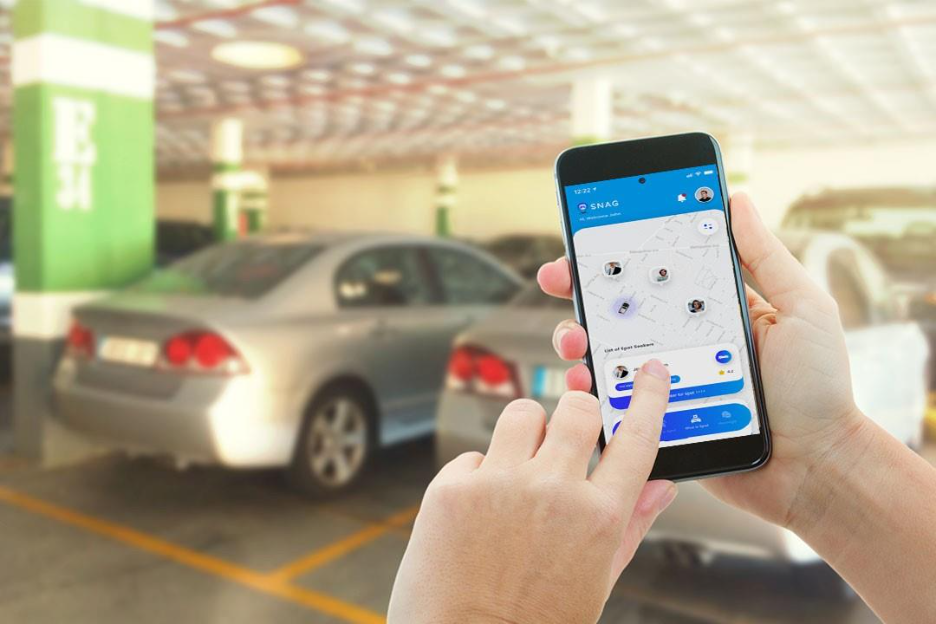
By enabling drivers to share real-world activity and movement insights, Snag functions as an app to share parking spots in a way that reflects actual street conditions. This approach produces more realistic guidance than generic maps or estimates.
The result is a parking experience that feels more intuitive and reliable. Instead of generic suggestions, Snag helps drivers focus on streets with realistic potential, cutting down wasted time and frustration. This shared intelligence benefits not only individual drivers but the city as a whole by reducing congestion and pollution caused by endless circling.
This shared intelligence benefits individual drivers while also supporting broader car parking solutions NYC needs by reducing congestion and emissions citywide.
Real-world proof of how a real-time parking app reduces circling, fuel usage, and daily stress.
Consider a contractor working across multiple NYC neighborhoods each week. Before using a real-time parking app, they budgeted an extra 20 to 30 minutes per stop just to find parking—time that added up quickly over the course of a day.
After switching to Snag, their routine changed. Instead of circling unpredictably, they checked likely parking zones before arriving. By targeting streets with higher turnover and avoiding known dead zones, they reduced parking time significantly.
Over a single week, they saved several hours that would have otherwise been spent driving in circles. Less driving meant lower fuel costs, fewer emissions, and a noticeably less stressful workday. This is the real-world impact of smarter parking technology, small improvements that compound into major gains.
FAQs: Real-Time Parking Apps
Why do real-time alerts matter?
Real-time alerts help drivers make informed decisions quickly, reducing hesitation, sudden maneuvers, and unnecessary circling in high-traffic areas.
Do real-time apps actually reduce circling?
Yes. By highlighting where parking is most likely available, real-time parking apps significantly reduce the need to loop the same blocks repeatedly.
How accurate are predictions?
Accuracy improves as more data is collected. Predictive models that combine historical patterns with real-time activity, like those used by modern parking apps, become increasingly reliable over time.
The Future of Driving Is Smarter Parking
As cities become more congested and time becomes more valuable, parking can no longer be an afterthought. The best parking app in 2025 isn’t just about finding a spot, it’s about making driving more efficient, safer, and more sustainable.
Snag helps drivers navigate NYC streets with confidence, saving time and reducing pollution by cutting down unnecessary driving. If you’re still relying on guesswork, it’s time to upgrade how you park.
Use Snag. Save time. Drive smarter.